
Introductory Log: The Sonic Blueprint of Recovery
Preparation Journal for Album Production: Mental Gymnasium Exhibition
After a long and necessary intermission, I’m officially setting the clock. This marks the beginning of my return to public creative life—a declaration not just to create, but to compose, to shape, and to perform what I’ve metabolized through solitude, recovery, and quiet observation. This time, it begins with sound.
The forthcoming electronic music album is not just a project—it’s a system I’m building to retrain my habits, reframe my focus, and explore who I’ve become after a year of detox, silence, and recalibration. Having stepped away from the overstimulated cycles of social media and compulsive content output, I’ve begun reconnecting with the internal rhythm of self-worth—a rhythm I now want to convert into auditory form.
This album will debut at the first edition of Mental Gymnasium, a cross-disciplinary art exhibition that threads together neuroscience, behavioral therapy, digital philosophy, and personal transformation. The music I’m crafting isn’t made for escapism—it’s composed as an experiential practice in self-regulation, flow, and the aesthetics of discipline.
I’m not just scoring soundtracks—I’m scoring emotional blueprints. Each track will serve as a sonic interpretation of the routines, relapses, rediscoveries, and reintegrations that have defined this phase of my life. My approach will mix analog sound textures with algorithmic precision—mirroring the paradox of living in a hyperconnected world while seeking interior clarity.
This album will live inside a closed-loop environment, much like a cognitive experiment. By placing boundaries on my process—limited tools, specific time windows, no passive consumption—I hope to reduce relapse into past behaviors and instead engineer a structure for enduring change. The music becomes both a mirror and a method—a signal system for self-direction.
In preparation, I’ve begun outlining moods and motifs rooted in what I’ve described elsewhere in my published articles: the tension between control and surrender, the neurological feedback loop of reward-seeking, the aesthetic of solitude, and the moral paradox of creating content in an attention-based economy. This will not be a commercial album. It will be a narrative artifact—a live demonstration of psychological and sonic resilience.
With that, I’ve opened the production window. From this point onward, I’ll be logging my creative process—intermittently sharing insights, sketches, and excerpts through the Mental Gymnasium newsletter as a form of participatory reflection.
Let this serve as my formal entry point: the sound of recovery is not silence—it’s structure.
Production Log #02: Designing Sound for Sentimental Resistance
Exploring Mood Architecture through Ambient & Neo-Classical Electronica
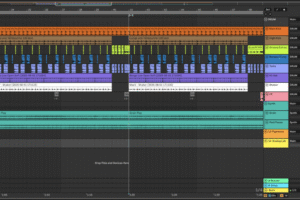
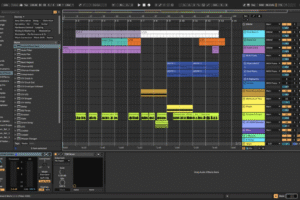
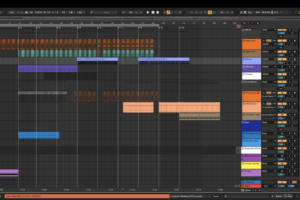
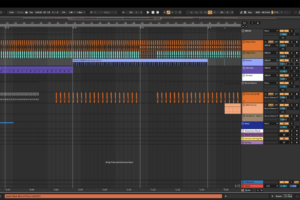
I’ve officially moved into the next phase of the project: sound design and compositional structuring. This is the stage where the abstract becomes tactile—where moods are mapped, and emotional threads are turned into frequency and form.
What I’m trying to design isn’t just a musical album—it’s a neuro-emotional sequence, a score for introspective resilience. It belongs to the ambient and neo-classical traditions, yet drifts toward trance and experimental edges. Each sonic decision is an act of self-regulation. The story here is not epic—it’s personal. It’s a soft rebellion told through textures and tone, lyrics and loops.
One of my biggest lessons in this process so far has been learning to find comfort in boredom. The blank DAW screen used to trigger an anxiety loop, as if the void demanded immediate brilliance. But now, boredom is an opening. It’s the silence before clarity. It’s in the space where I retrain my brain to communicate more honestly—not just in words or visuals, but in resonance.
This project is my way of processing the moral panic around technology—the overload, the dopamine stacking, the endless scroll of trivial urgency. I compose these soundscapes to contrast with that noise. Where the world offers an abundance of stimulation, I’m leaning toward essentialism. One melody, one progression, one interval of stillness at a time. I’m building dopaminergic discipline into the architecture of the music: reward through restraint, groove through spaciousness.
I oscillate between modes of cognition—sometimes writing journal entries on productivity and neural architecture, other times practicing scales on the piano. This shifting is not a distraction; it’s a form of cross-training. Each mode sharpens the others. When I approach sound design now, I’m not just layering pads or building rhythms—I’m modeling structure for the sake of processing emotion. The goal isn’t perfection. The goal is to rewire how I relate to attention, satisfaction, and personal value.
I’m drawing inspiration from the art-class mindset—approach each track like a personal assignment. Draft, sketch, reflect. Revise with care. Let the mistakes become motifs. This framework makes it easier to avoid the negative cycles of short-circuit habits that once consumed my focus and triggered compulsive behaviors. I’ve learned that even mundane actions, when repeated mindlessly, can form into a kind of behavioral addiction. That’s why I’m now working in habitual intervals, restructuring time into digestible frames of purposeful effort.
A central element of this album is exploring humanistic productivity—a type of productivity rooted not in output or performance metrics, but in alignment with core values and existential direction. Humanism, at its core, places emphasis on inherent worth, agency, and meaning-making. I’m applying that philosophy to composition: sound not for entertainment, but for orientation. Music serves as a platform for questioning, not just providing answers.
Automation, in this sense, becomes a double-edged strategy. Not only does it lessen tension, but it also fosters a sense of ritualized comfort—a comfort that enables the emergence of a more profound and deliberate focus. It’s not about doing less to achieve less. It’s about doing less so the right things can surface. That’s the essence of the path I’m walking now: persistence in the right direction, not in every direction.
Each sound I build—each delay tail, chord cluster, or filtered noise—is a choice. Indeed, it’s a moral choice. A code grounded in intuition, composed with care, released with intent. I’m not sure if this music will change anything for others—but it’s changing how I relate to time, focus, and fulfillment. That’s enough reason to continue.
This segment is where I begin constructing the sonic backbone of Mental Gymnasium. This is essentially a sentimental electronica suite. A nervous system made audible. It offers a serene opposition to the era of instant gratification.
The music is coming. Slowly. But truthfully.
Suwin


“I want to disappear, but I’m furious no one sees me.
I love solitude, yet I refresh my feed for affirmation.
I hate being watched—but I dress like a manifesto.
I’m addicted to clarity, but I bathe in ambiguity.”